

Over the last few decades, investors have lived through no shortage of reasons to be concerned: wars, terrorist attacks, financial crises, political uncertainty, inflation, pandemics, bank failures, and market crashes. And now, another round of geopolitical tensions dominates the news cycle.
The specifics are always different. The headlines change. The predictions change. The experts change. But one thing remains remarkably consistent: human nature doesn’t.
Every Headline Feels Different While You’re Living Through It
One of the interesting things about uncertainty is that it always feels unique in the moment. Every crisis arrives with its own set of circumstances, and every event comes with new risks, new worries, and new reasons to believe this time may be different.
People naturally ask questions like, “Should I be doing something? Should I move to cash? Should I wait before making a decision? What if things get worse?”
Those reactions are completely understandable. None of us enjoy uncertainty. In fact, one of the reasons uncertainty feels so uncomfortable is because our brains are constantly searching for ways to reduce it.
The Desire to “Do Something”

When uncertainty rises, many people feel pressure to take action. Not because a plan requires it, but simply because action feels better than inaction. Cash feels safer. Selling feels safer. Waiting feels safer. Making a change feels safer.
The challenge is that the feeling of safety and the reality of it are not always the same thing. Because some of the most costly financial decisions are made during periods of fear, uncertainty, and emotional stress. Not because people are irrational. Because they’re human. We wrote more about how this instinct plays out in The Hidden Risk of Being Too Conservative in Retirement.
The Real Risk Isn’t Always the Headline
When most people think about risk, they focus on the event itself: the conflict, the market decline, the economic concern. But often the greater risk is how we respond.
A temporary event can create a permanent decision. A short-term concern can lead to a long-term change in strategy. And that’s where problems often begin, because while the headlines eventually move on to something new, the financial consequences of emotional decisions can last for years.
What History Continually Teaches Us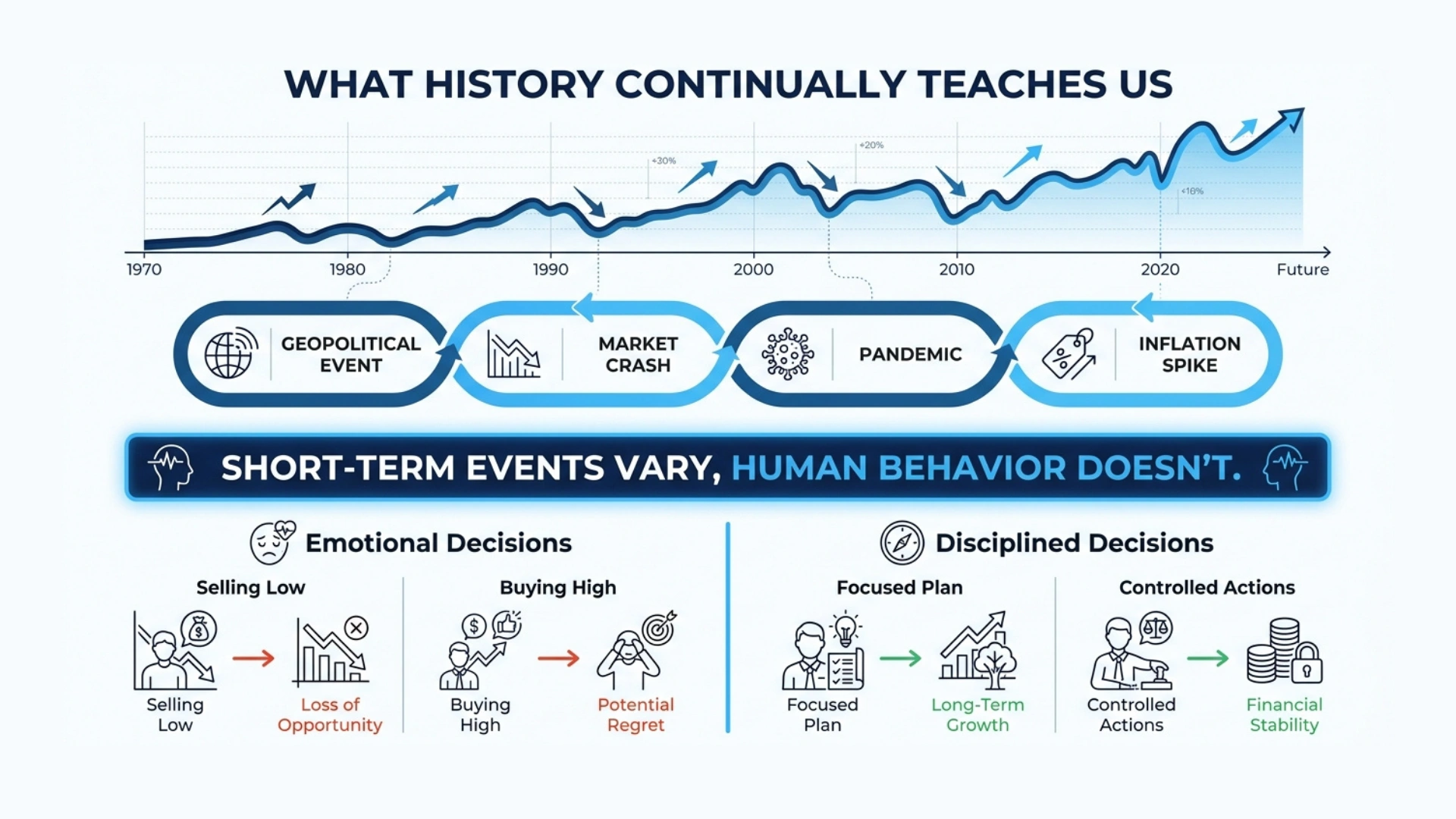
If you study financial history, a pattern emerges. The specific events change. Human behavior does not. Every generation encounters moments that feel unprecedented, and every generation faces uncertainty that appears impossible to predict. Every generation is tempted to believe that a long-term plan should be abandoned because of a short-term event.
Yet time and again, the people who tend to navigate uncertainty most successfully are not those who perfectly predict the future. They’re the ones who remain focused on the things they can control.
Why Planning Matters More During Uncertainty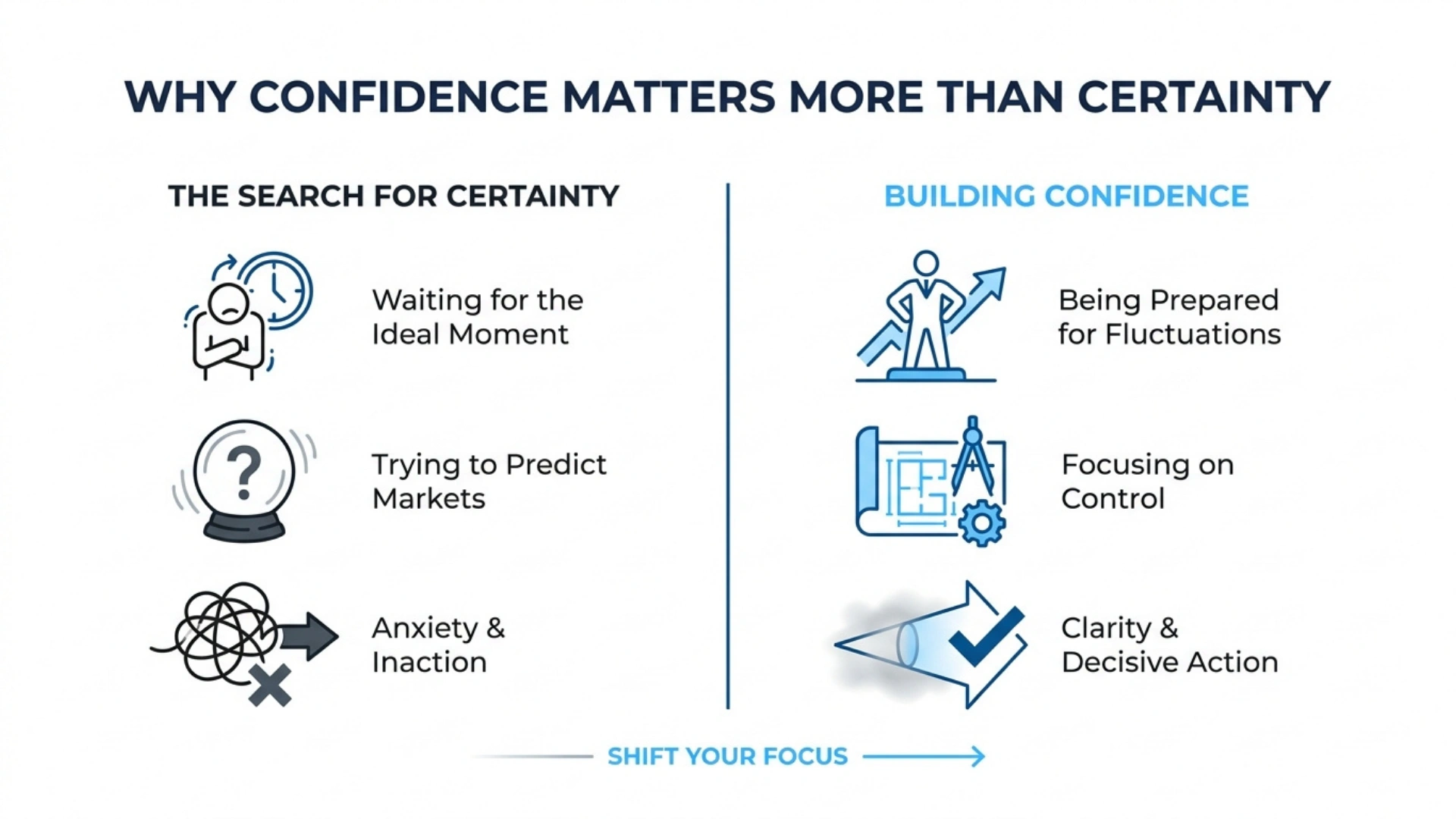
One of the biggest misconceptions about financial planning is that its purpose is to predict what’s coming next. It isn’t. A good financial plan isn’t designed to predict the next war, the next recession, the next election, or the next market decline.
The purpose of a financial plan is to help you make better decisions when uncertainty inevitably arrives, because uncertainty isn’t the exception. It’s part of the journey. There will always be another headline, another concern, another reason to worry. The specifics simply change over time.
What an Integrated Plan Provides
When people have a plan built as one integrated whole, something interesting happens. The conversation begins shifting from “What should I do about today’s headline?” to “How does today’s headline affect my long-term plan?” Those are very different questions. One is driven by emotion. The other is driven by perspective.
An integrated plan helps create that perspective. It helps people understand where income is coming from, how taxes fit into the picture (our Taxes in Retirement webinar goes deeper on this), what role each asset plays, how risks are being managed, and what adjustments are available if circumstances change.
That doesn’t eliminate uncertainty. But it often reduces the temptation to make emotional decisions because of it.
Why Confidence Matters More Than Certainty
One of the lessons retirement teaches is that certainty is rarely available. Nobody knows exactly what markets will do, how long they will live, what tax laws will change, or what the economy will look like in five years. Waiting for certainty usually means waiting forever.
Confidence comes from somewhere else. It comes from understanding how the plan is designed to work even when circumstances aren’t ideal. It comes from knowing that the plan has been built with uncertainty in mind. Because if a retirement plan only works when everything goes right, it’s probably not much of a plan.
A Final Thought
The headlines will continue to change. They always do. New concerns will replace old ones, new risks will emerge, and new predictions will be made. And through it all, human nature will remain remarkably consistent. We’ll continue looking for certainty, continue feeling uncomfortable during periods of uncertainty, and continue feeling tempted to make decisions based on what feels urgent in the moment.
That’s why the goal of a financial plan isn’t to eliminate uncertainty. It’s to provide enough clarity, structure, and perspective that you can make thoughtful decisions when uncertainty inevitably shows up. Because in the end, successful retirement planning isn’t about predicting the future. It’s about being prepared for it. And that’s a lesson that remains just as relevant today as it was through every headline that came before it.