When people think about retirement, most of the questions start with “What if?” What if the market crashes? What if taxes go up? What if inflation stays high? What if healthcare costs become overwhelming? What if I live longer than expected? What if something goes wrong?
Those are reasonable questions. In fact, they’re some of the most important questions a retirement plan should address. But there’s another question that rarely gets asked, and in many ways, it may be just as important: what if everything goes right?
We’re Conditioned to Focus on Risk
For most of our lives, we’re taught to prepare for problems: save more, spend less, protect against risk, plan for worst-case scenarios. And while those habits can be incredibly valuable, they can also create something interesting.
People become so focused on protecting their future that they never stop to consider what success is actually supposed to look like. The goal becomes accumulating, then preserving, then protecting. And somewhere along the way, they lose sight of the reason they started building wealth in the first place.
What Happens When the Plan Works?

I’ve met many people who have spent decades making responsible decisions. They worked hard, saved consistently, avoided unnecessary risks, and built meaningful wealth over time.
Yet when retirement arrives, something unexpected happens. They struggle to enjoy it. Not because they don’t have enough, but because they’re not entirely sure what they’re allowed to do. Questions start showing up like: Can we afford the trip? Can we spend more? Can we help the kids? Can we buy the vacation home? Can we retire now? Can we enjoy what we’ve built?
In other words: what if everything works the way it was supposed to? For many people, that’s a surprisingly difficult question to answer.
The Goal Was Never the Money
Money matters. But money has never been the destination. It’s a tool, one meant to support the life you want to live, the relationships you want to nurture, the experiences you want to have, the causes you care about, and the people you hope to impact.
Yet it’s surprisingly easy to spend decades focused on growing assets without ever defining what success looks like once you’ve achieved it. As a result, many people reach retirement with substantial resources but very little confidence about how to use them. We explored this same idea in The Retirement “Number” Myth, if you want to see why the number itself often isn’t the point.
Why More Wealth Doesn’t Always Create More Freedom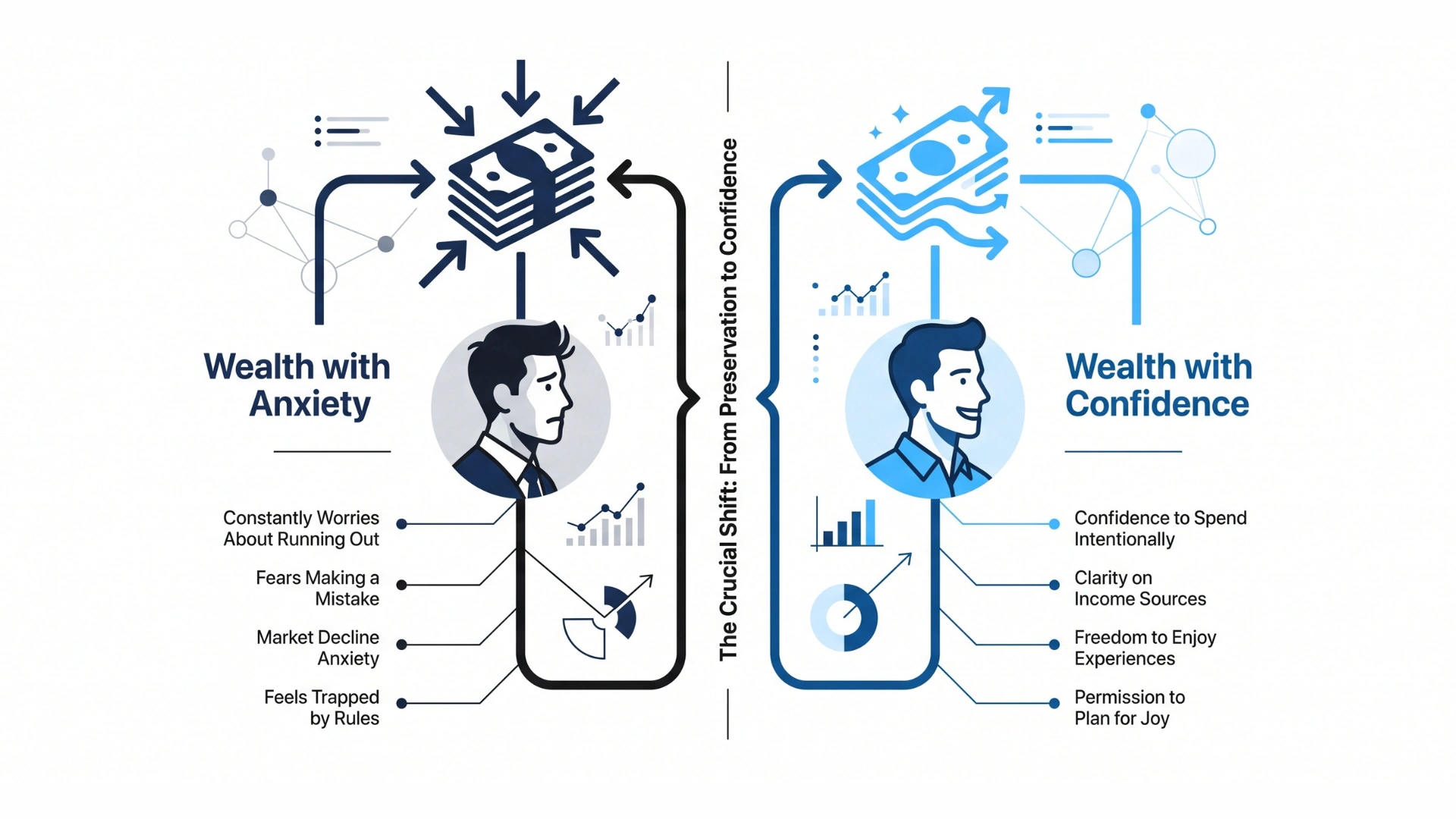
One of the biggest misconceptions in retirement is that more money automatically creates more freedom. Sometimes it does. But not always, because freedom isn’t just about resources. It’s about confidence.
If someone has millions of dollars but constantly worries about running out of money, paying unnecessary taxes, making a mistake, spending too much, or market declines, they may have financial resources, but they still don’t feel financially free. The challenge isn’t always the amount. Sometimes it’s the uncertainty. As we discussed in Why More Money Doesn’t Always Create More Confidence, the size of the number rarely fixes this on its own.
This Is Where Planning Changes
For much of your life, financial planning is focused on accumulation. The question is, “How do I build wealth?” Eventually the question becomes, “How do I use wealth?” That’s a completely different conversation.
Because retirement isn’t simply a financial event. It’s a life transition. And the purpose of a good plan isn’t just to help assets grow. It’s to help you use those assets intentionally, to support the life you want to live.
What If the Best Outcome Isn’t a Larger Account Balance?
One of the most interesting things I’ve observed is that some of the happiest retirees aren’t necessarily the wealthiest. They’re often the people who understand their plan. They know where their income is coming from, how taxes fit into the picture, what role their assets play, and what adjustments they can make if circumstances change.
That understanding creates something powerful. Not certainty. But confidence. And confidence often gives people permission to enjoy what they’ve spent decades building.
What Happens When It All Connect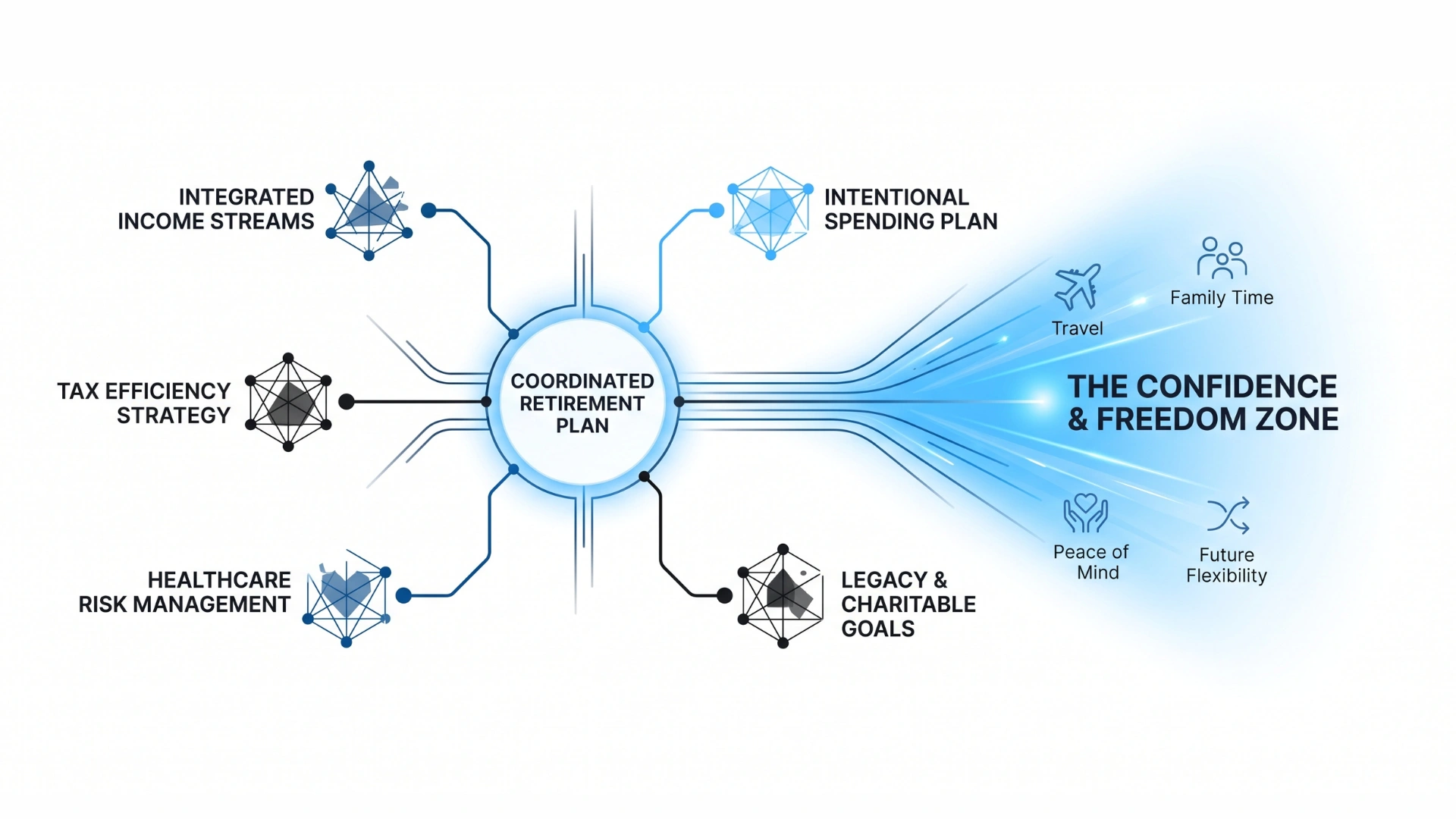
A plan built as one integrated whole does more than organize investments. It helps connect income, taxes, spending, healthcare decisions, legacy goals, charitable intentions, and future flexibility.
When those pieces work together, people often experience something they weren’t expecting: less worry, less second-guessing, and less wondering whether they’re missing something important. And more confidence in their ability to make meaningful decisions. Not because every risk has disappeared, but because they understand how the plan is designed to work.
Living Versus Simply Preparing
There eventually comes a point when retirement planning stops being about preparing for life and starts becoming about living it. That doesn’t mean becoming reckless, and it doesn’t mean ignoring risks. It simply means recognizing that protecting the future and enjoying the present don’t have to be opposing goals.
A well-designed plan creates room for both.
A Final Thought
Most retirement planning conversations start with the question, “What if something goes wrong?” And that’s an important question. But it may not be the only one worth asking.
Because after decades of working, saving, investing, and planning, what if the plan works? What if you have enough? What if your resources can support the life you’ve envisioned? What if the future is better than you expect?
The purpose of a financial plan isn’t simply to prepare for bad outcomes. It’s to create the clarity, flexibility, and confidence to enjoy the good ones as well. Because ultimately, success isn’t measured by the size of an account. It’s measured by your ability to use what you’ve built in a way that supports the life that’s most meaningful to you.
And sometimes the most important question isn’t, “What if everything goes wrong?”
It’s, “What if everything goes right?”