Most people spend their working years believing that more money creates a better retirement. And to some extent, that’s true. Money creates opportunities, it creates flexibility, it provides security, and it can help support the lifestyle you’ve worked hard to achieve.
But after years of sitting down with people preparing for retirement, I’ve noticed something interesting: the retirees who seem most at peace aren’t always the ones with the largest account balances. And some of the people with the most wealth still spend a surprising amount of time worrying.
That observation raises an important question: what if the most valuable asset in retirement isn’t money at all?
Table of Contents
We Spend Decades Chasing a Number
For most of our lives, financial success is measured by growth. We focus on saving more, investing more, increasing account balances, and building net worth. Those are important goals, and they’re also relatively easy to measure. You can log into an account and see the progress, track the number, and compare where you are today versus where you were ten years ago.
But retirement eventually changes the conversation. Because once you’ve spent decades building wealth, a different question begins to emerge: “What is all of this actually supposed to do for my life?” We explored this same idea inThe Retirement “Number” Myth, if you want to see why the number itself often isn’t the point.
The Things People Value Most Rarely Show Up on a Statement
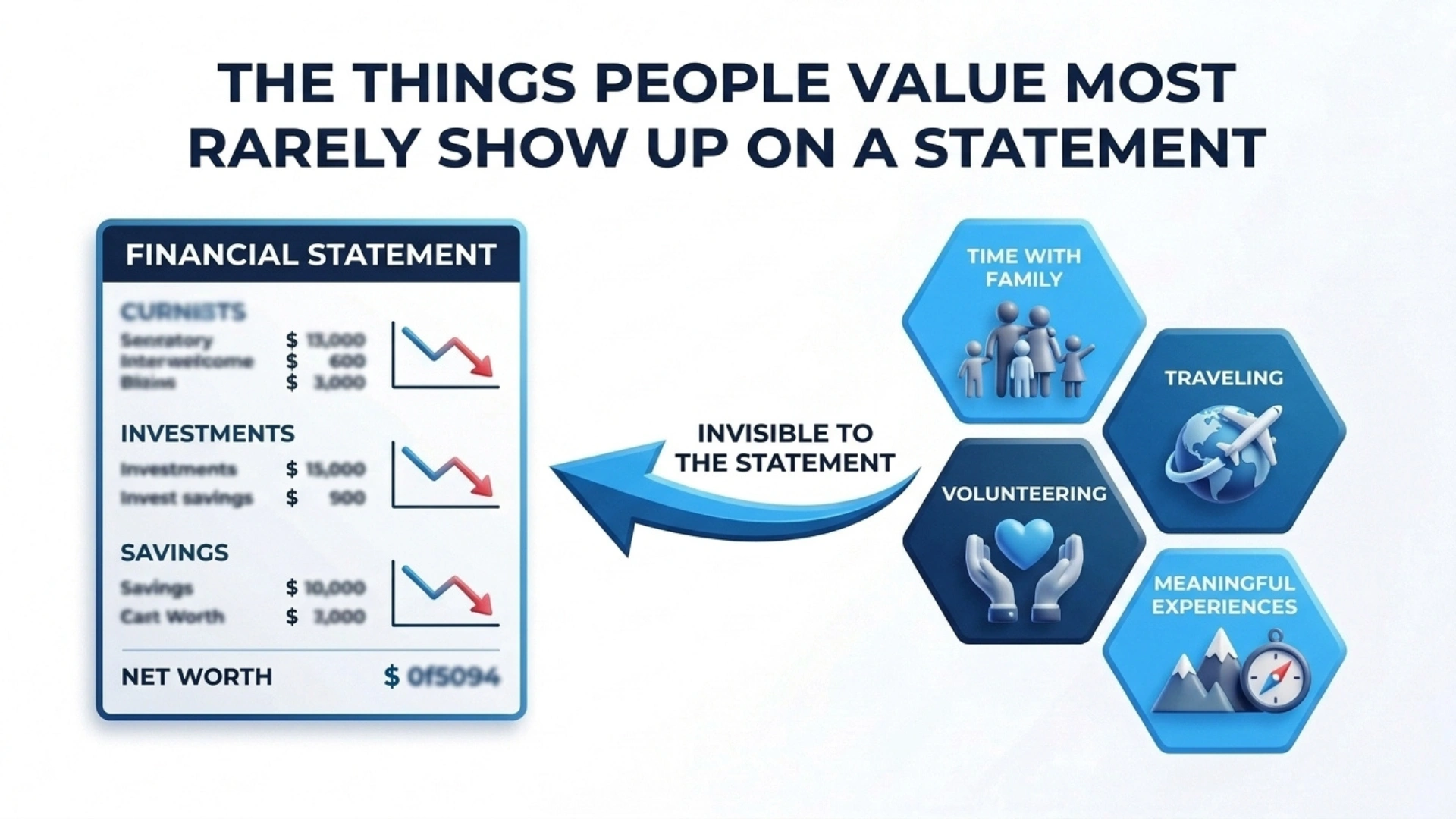
I’ve never had a retiree tell me their favorite retirement memory was checking an account balance. What people talk about instead is time with family, traveling with a spouse, attending grandchildren’s events, pursuing hobbies, volunteering, helping others, and creating meaningful experiences.
Those are often the moments people cherish most, and none of them appear on an account statement. That’s because money is rarely the end goal. It’s simply a tool that helps support what matters most.
Why Some People With Plenty of Money Still Feel Uncertain
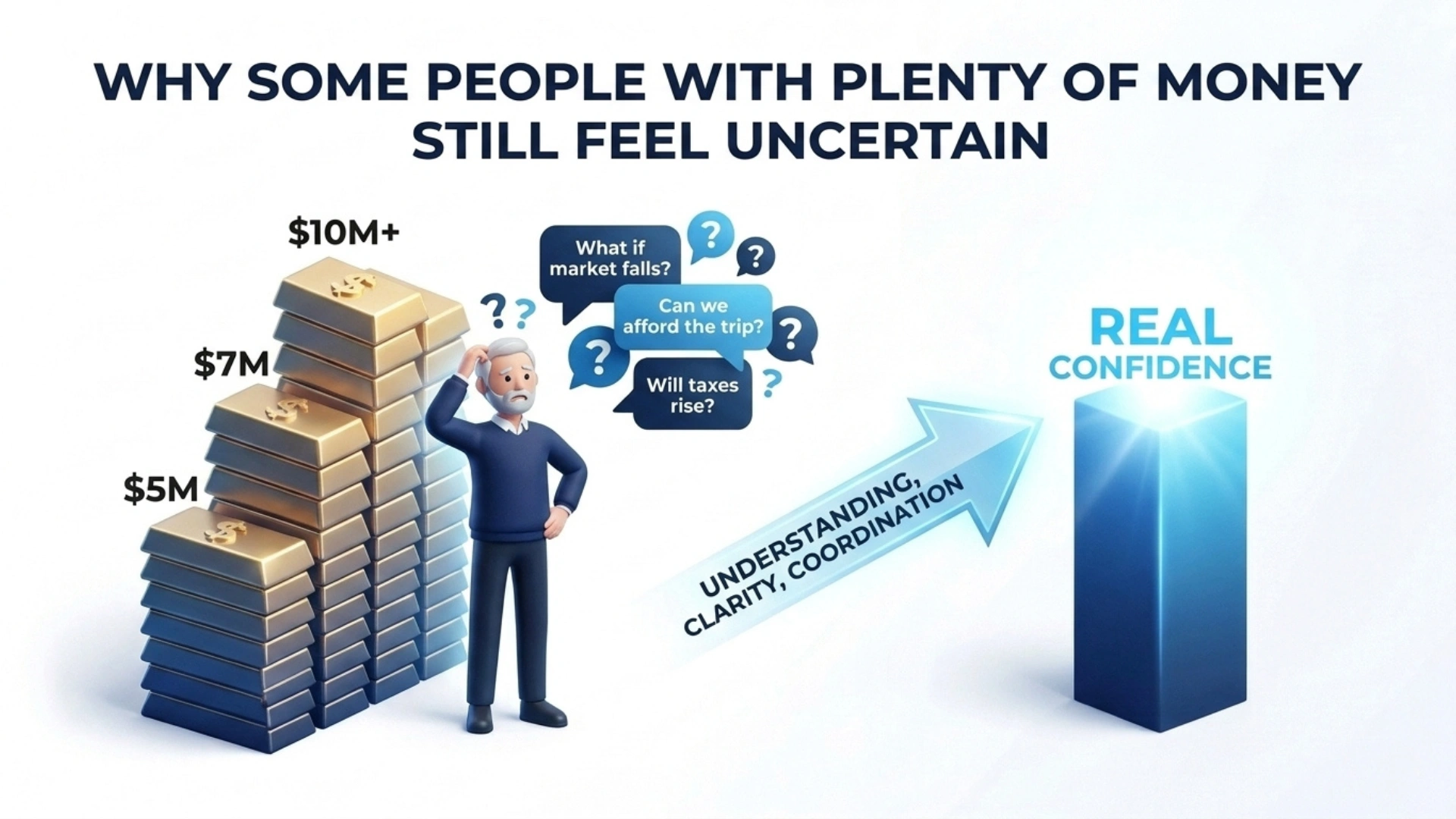
One of the biggest surprises for many people is that reaching a financial milestone doesn’t automatically create confidence. I’ve met people with substantial assets who still wonder: Can we afford the trip? Should I spend this money? What if something happens? What if taxes increase? What if markets decline? What if I need care later?
The assets may be there. The confidence often isn’t. Because confidence doesn’t generally come from a number. It comes from understanding. It comes from clarity. It comes from knowing how the pieces fit together.
The Asset Many People Are Really Looking For
When people say they want more money, what they’re often really saying is, “I want more confidence,” or “I want more freedom,” or “I want less stress.” Money can help create those things. But it doesn’t automatically create them.
That’s why some retirees with modest assets sleep well at night while others with significant wealth remain worried. The difference often isn’t the amount they’ve accumulated. It’s how clearly they understand their situation and how confidently they can make decisions moving forward.
What Creates Real Confidence
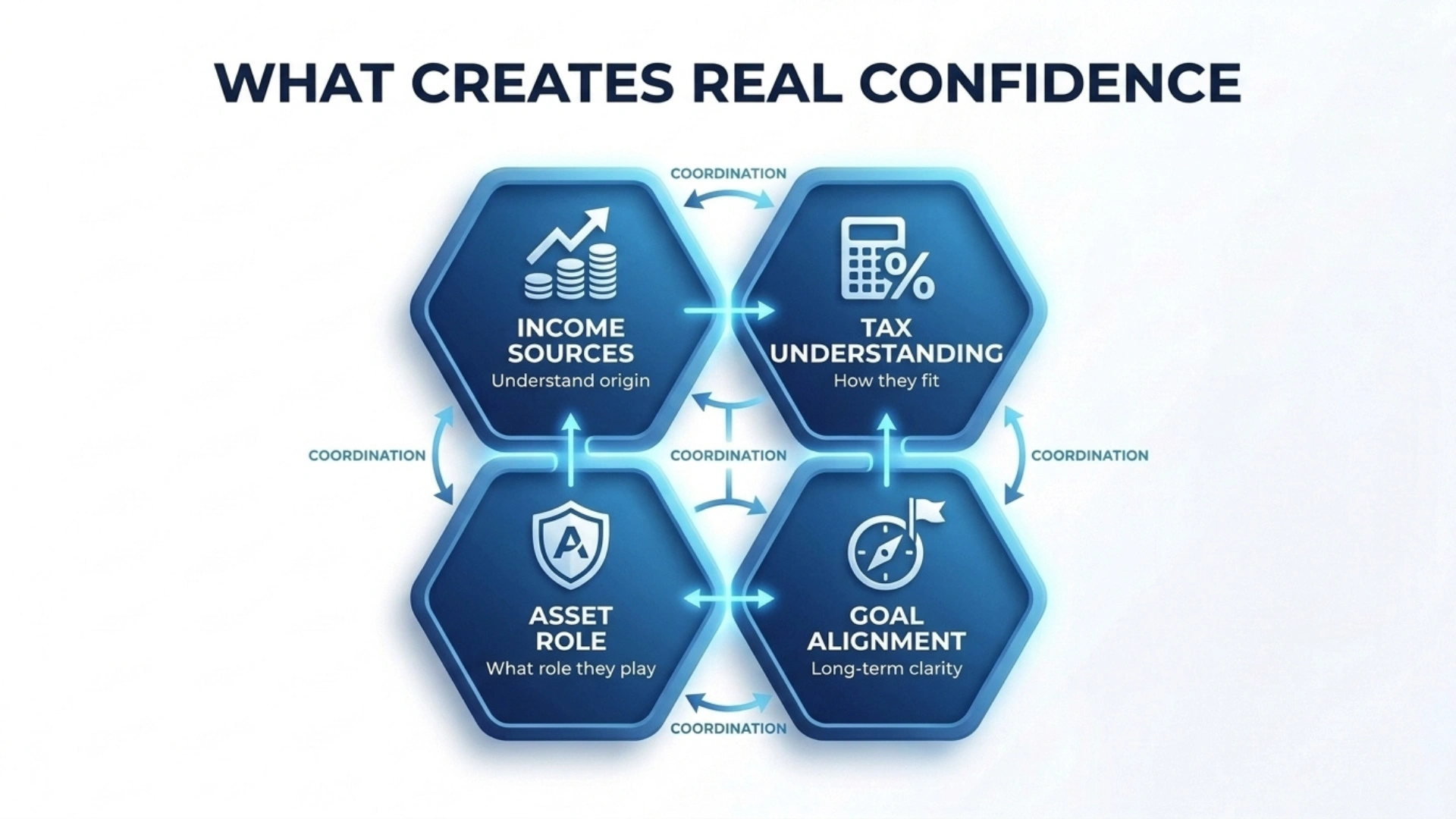
The retirees who seem most comfortable aren’t usually the ones who know exactly what the future will bring, because nobody knows that. Instead, they’re often the people who understand where their income comes from, how taxes fit into the picture, what role their assets play, what adjustments are available if circumstances change, and how their decisions support their long-term goals.
That understanding creates something powerful: perspective. And perspective often leads to confidence.
Why Coordination Matters
This is where many people discover the difference between having money and having a plan. Because retirement isn’t experienced through individual accounts. It’s experienced through life.
Income decisions affect taxes. Taxes affect future flexibility. Healthcare decisions affect spending. Estate planning affects future generations. Investment decisions affect income and risk. Everything starts interacting.
And when those pieces aren’t connected, uncertainty often grows. Not because people don’t have enough, but because they don’t fully understand how everything works together.
What Real Freedom Actually Looks Like
There’s a common belief that financial freedom arrives once you reach a certain number. But I think financial freedom looks different for different people. For some, it’s having the confidence to retire. For others, it’s taking a trip they’ve postponed for years. For others, it’s helping children or grandchildren. For others, it’s knowing their spouse will be okay if something happens.
The common thread isn’t the amount of money. The common thread is having enough clarity and confidence to make decisions without constant fear or second-guessing.
The Most Valuable Asset
Eventually, retirement planning stops being about accumulation. The focus shifts from building wealth to using wealth intentionally. That’s when the most valuable asset often becomes something that can’t be measured on a statement, a kind of steadiness: the confidence that your decisions are aligned with your goals, the flexibility to adapt when life changes, the clarity to know where you stand, and the freedom to enjoy what you’ve spent decades building.
A Final Thought
Money matters. It creates opportunities, flexibility, and security. But at some point, retirement becomes about something deeper. Because the goal was never simply to accumulate the largest account balance possible. The goal was to use your resources in a way that supports the life you want to live: to spend time with the people you love, to pursue experiences that matter, to help others, and to leave a legacy. And to move through retirement with confidence.
That’s why the most valuable asset in retirement isn’t necessarily money. It’s the clarity, flexibility, confidence, and genuine security that allow you to use that money in a meaningful way. Because in the end, that’s what most people are truly looking for.