
Every year, it seems the holiday season starts a little earlier. Store shelves are already filling with decorations and gift ideas long before the leaves have finished turning, and people are encouraged to think about gifts well before the season actually arrives.
It got me thinking about a different kind of gift. One that has nothing to do with shopping, presents, or wrapping paper. A gift that many retirees spend decades earning, but surprisingly few ever give themselves. The gift of permission.

Most people spend their entire working lives doing the right things. They work hard, save consistently, invest thoughtfully, delay gratification, make sacrifices, and focus on building a better future. For decades, the goal is clear: save now so life will be easier later.
And then one day, later finally arrives. Retirement begins. The mortgage is paid off. The accounts have grown. The plan is in place. And yet many people continue behaving as though they’re still preparing for retirement rather than living it.
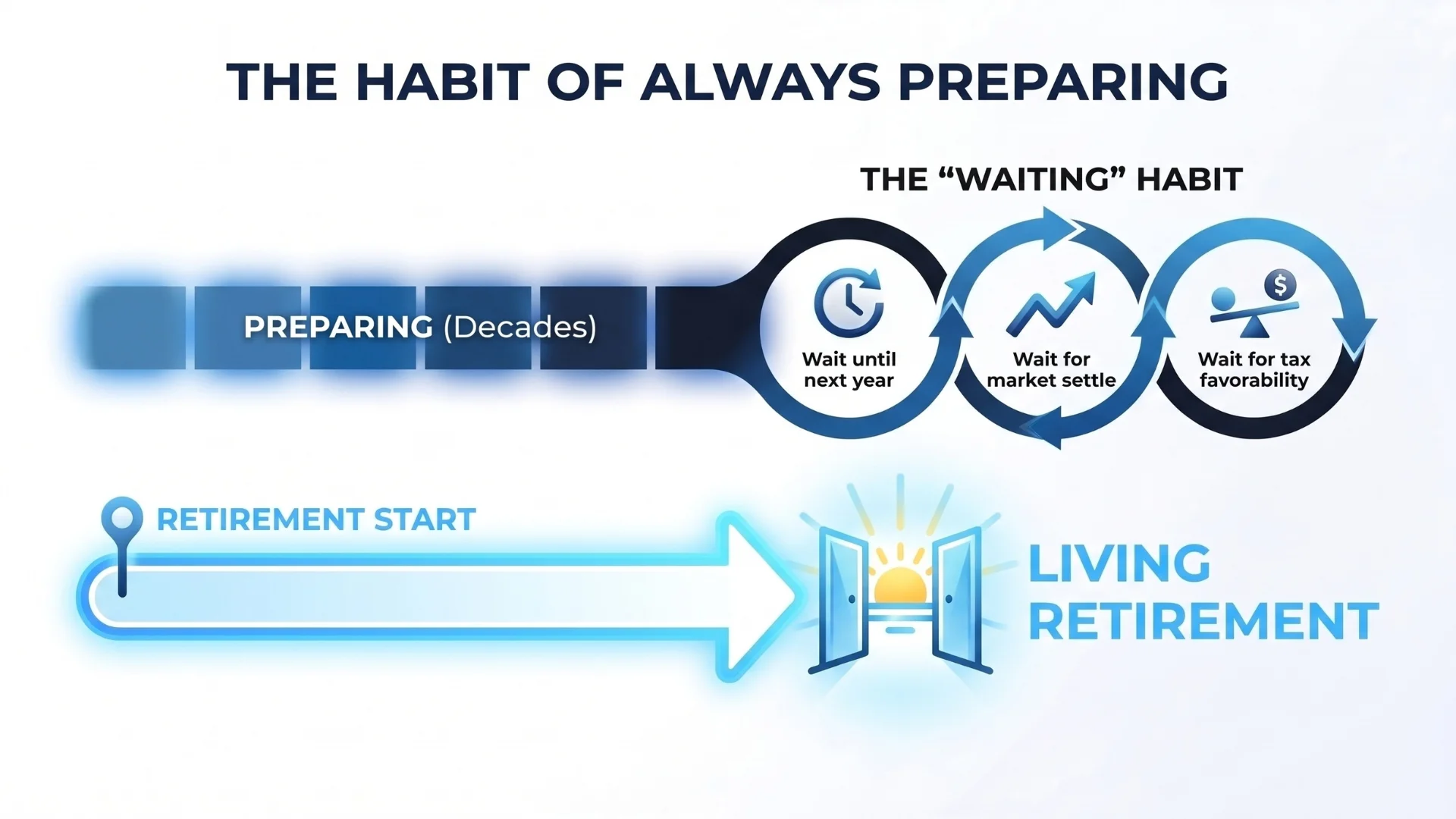
One of the most common things I see among retirees is the habit of waiting: waiting until next year, waiting until markets settle down, waiting until taxes feel more favorable, waiting until there’s more certainty, waiting until the timing feels perfect.
And while those instincts are understandable, they can become difficult habits to break. Because after spending decades preparing for the future, it can feel unnatural to start enjoying the present, even when the resources are there.
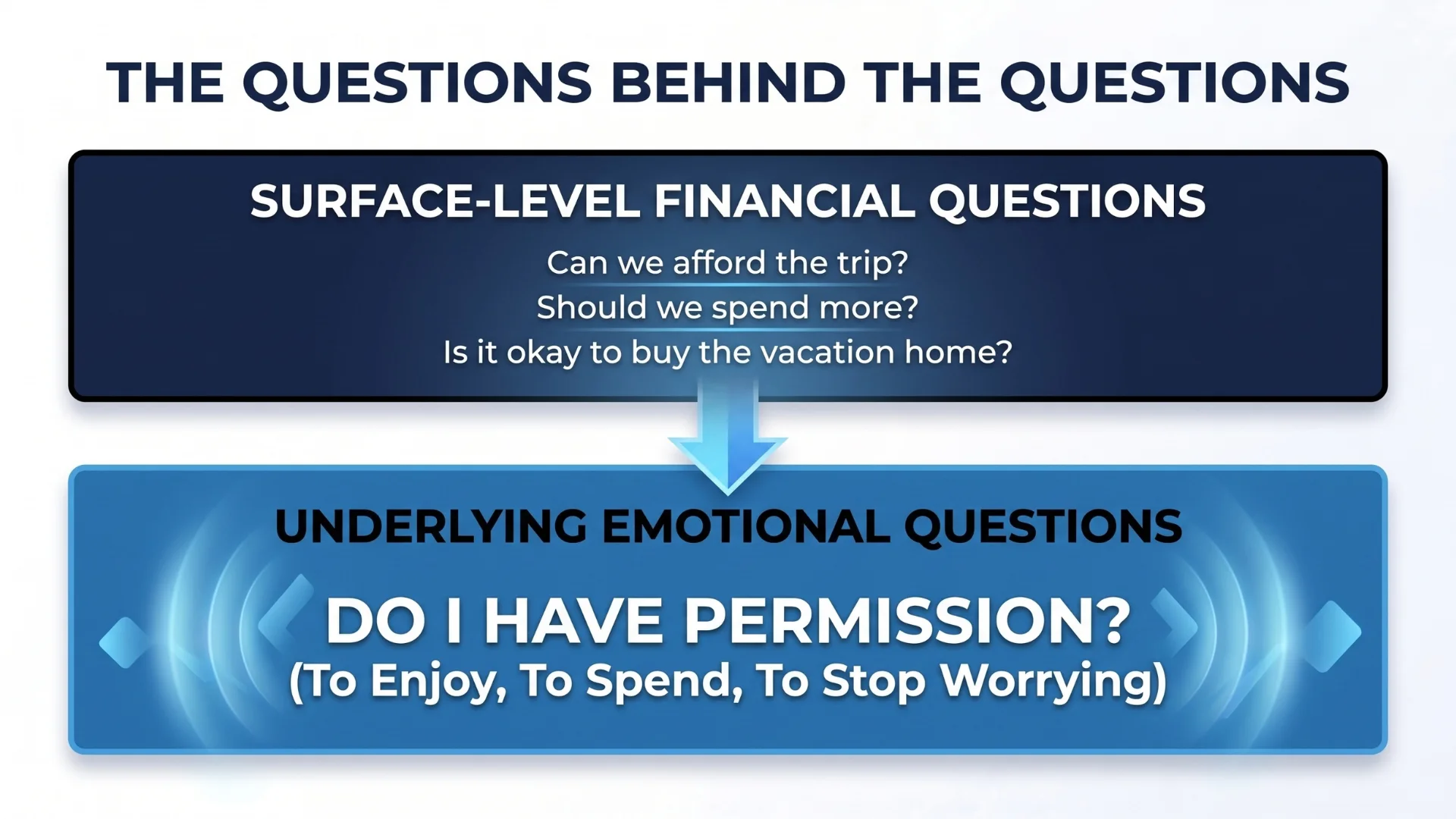
Many of the conversations I have aren’t really about money. They sound like money questions on the surface: Can we afford the trip? Should we spend more? Is it okay to buy the vacation home? Can we help our children financially? Do we really have enough?
But underneath, the question is often something else entirely. It’s, “Do I have permission?” Permission to enjoy, permission to spend, permission to use what I’ve worked so hard to build, permission to stop worrying about every dollar. That’s a much different conversation.
One of the interesting things about retirement is that success isn’t always obvious. I’ve met people with substantial wealth who still hesitate to spend money, who still worry, who still feel uncertain. Not because they don’t have enough, but because they don’t fully trust the plan, or they don’t fully understand how all the pieces fit together.
As a result, they continue operating from a mindset of accumulation long after accumulation is no longer the objective. The account balance grows. But life stays on hold.

The interesting thing is that permission looks different for everyone. For some retirees, it means finally taking the trip they’ve talked about for years: the Alaskan cruise, the European river cruise, the RV adventure they’ve spent a decade dreaming about, the family vacation where everyone can be together. Not because it’s the most efficient financial decision, but because those experiences are exactly why they worked and saved in the first place.
For others, permission means spending more time with family. I’ve met retirees who delayed retirement longer than they needed to because they were worried about giving up another year of income. Then they retire and realize what they value most isn’t another percentage point of return. It’s being able to attend a grandchild’s soccer game on a Tuesday afternoon, taking the grandkids to Disney, being present for the moments you can’t get back.
Sometimes permission looks much smaller. It’s finally hiring help around the house, taking the nicer seat on the flight, joining the golf club, taking the art class, buying the fishing boat, replacing the car you’ve been driving for fifteen years because you wanted to. Not because you had to. Because you could.
And sometimes permission looks like generosity: helping a child buy their first home, funding a grandchild’s education, supporting a church, charity, or cause that’s always been meaningful to you, and being able to experience the joy of seeing those gifts make an impact while you’re here to enjoy it.
The common thread isn’t the specific decision. It’s the realization that wealth was never the goal. Those experiences were. The time was. The relationships were. The opportunities were. The money was simply the tool that made them possible.
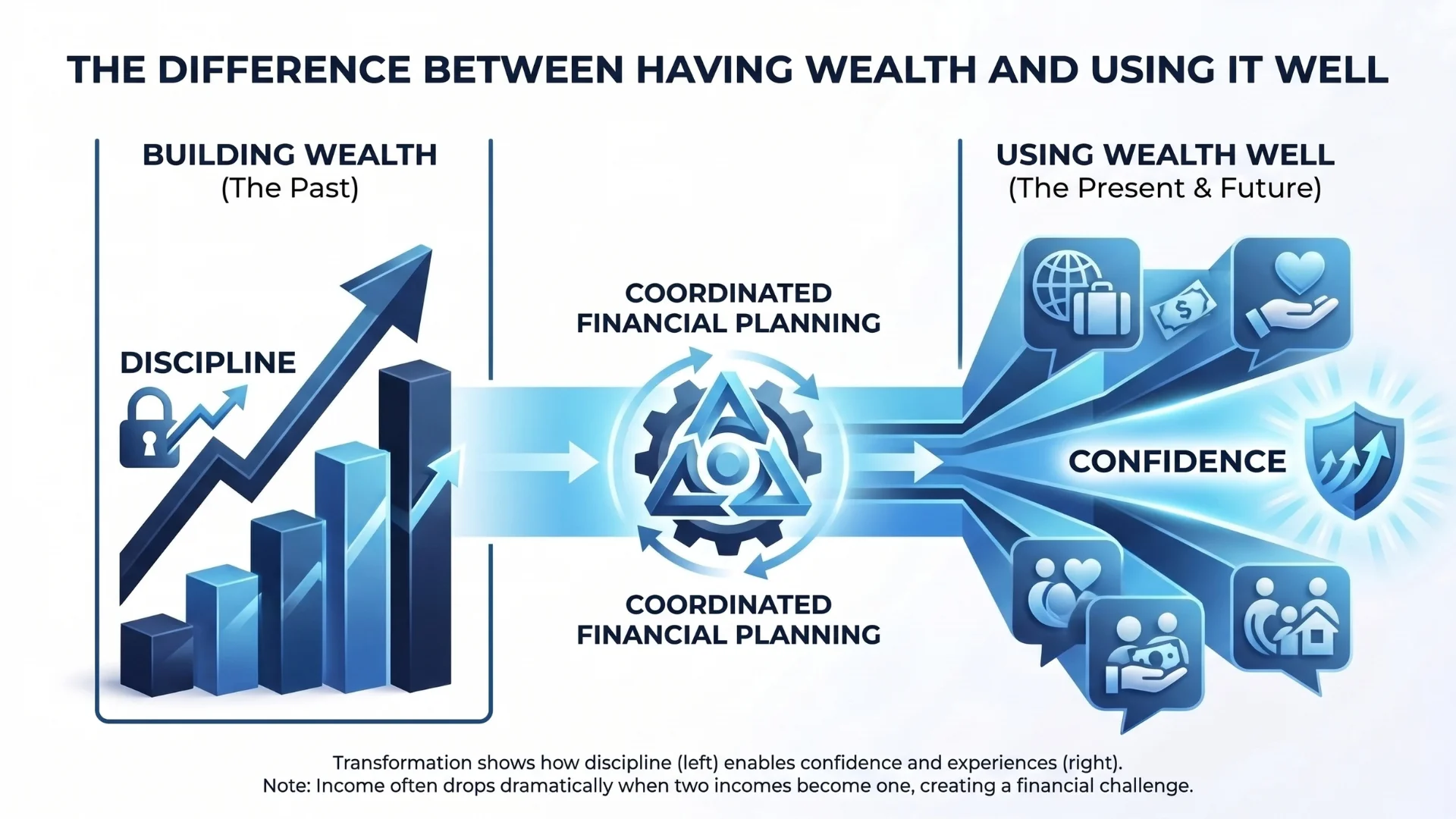
There’s an important distinction between building wealth and benefiting from it. Building wealth is often about discipline. Using wealth well is often about confidence: confidence that your income plan works, your investments are aligned with your goals, your taxes are being managed thoughtfully, your family is protected, and your future is secure.
Because when those pieces are designed to work as one plan, something important happens. The conversation begins shifting from “Can we afford it?” to “Is this important to us?” That’s a very different way to make decisions. We touched on this same tension in Why More Money Doesn’t Always Create More Confidence.
Many people think a financial plan exists to grow wealth. That’s certainly part of it. But eventually, a good financial plan creates something even more valuable. It creates confidence: confidence to travel, confidence to help family, confidence to spend intentionally, confidence to make memories, and confidence to enjoy experiences without constantly second-guessing every decision.
In many ways, the best financial plans don’t just help people build wealth. They help people use it.
None of us know exactly how much time we have. None of us know how many summers remain, how many opportunities remain, how many family vacations remain, how many holiday seasons remain.
That’s not a reason to be fearful. It’s a reason to be intentional. Because there eventually comes a point when protecting the future and enjoying the present need to exist together. A well-designed plan creates room for both.
As the holiday season approaches, it’s easy to think about gifts: the gifts we give, the gifts we receive, and the things that matter most during this time of year. But perhaps the greatest gift many retirees can give themselves isn’t something that can be wrapped. It’s permission: permission to stop measuring success solely by an account balance, permission to enjoy the life they’ve worked so hard to build, and permission to create memories with the people they care about most.
Because at the end of the day, most people don’t spend decades saving and investing so they can stare at a larger account balance. They do it so they can spend more time with the people they love, create memories they’ll never forget, help others, pursue experiences they’ve been putting off, and enjoy the life they’ve worked so hard to build.
Sometimes the greatest gift a retiree can give themselves isn’t more money. It’s permission to use it. Because the purpose of financial planning isn’t simply to help you accumulate wealth. It’s to help you use that wealth in a way that supports the life, relationships, and experiences that matter most. And that’s a gift worth giving yourself.

DOWNLOAD YOUR COPY OF
The Guide to Taxes and Your Retirement