Most financial mistakes don’t happen because someone makes a terrible decision. More often, they happen because a decision that should have been addressed today gets pushed into tomorrow, and then next month, and then next year. Not because anyone is being careless, usually because life gets busy, or because nothing feels urgent, or because there always seems to be more time.
The challenge is that some of the most important retirement decisions don’t become more valuable with time. They become more limited. If you’re unsure whether now is the right time to get help sorting through them, ouradvisor readiness checklist can help you think it through.
Table of Contents
Waiting Rarely Feels Expensive
One of the reasons waiting is so common is because it usually doesn’t create an immediate consequence. Nothing breaks, nothing feels wrong, and life continues moving forward. It’s easy to assume, “We’ll deal with that later.” And in the short term, that often feels harmless.
But retirement decisions have a unique characteristic. The opportunity exists today. The cost often shows up years later.
The Decisions People Delay Most Often
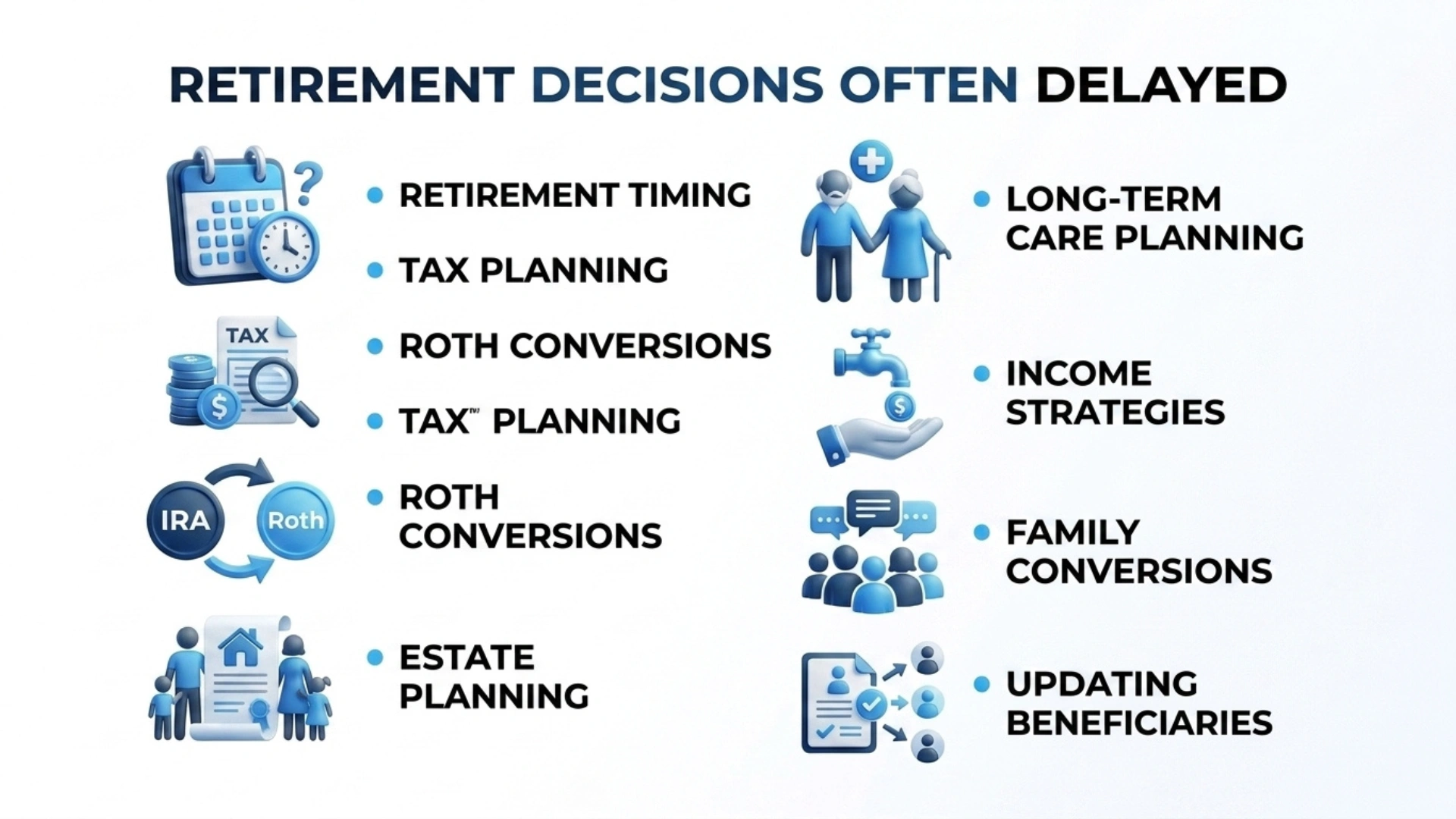
Over the years, I’ve seen people postpone decisions around retirement timing, tax planning, Roth conversions, estate planning, long-term care planning, income strategies, family conversations, updating beneficiaries, and integrating their overall plan. Each of these decisions feels like something that can wait, until one day it can’t.
Why the Cost Is Often Invisible
Imagine someone retires and enjoys several years of relatively low taxable income. Those years may create opportunities to manage future tax exposure, evaluateRoth conversions, or reposition assets strategically. But if those opportunities are missed, nothing necessarily happens right away. There isn’t an immediate penalty.
Years later, however,required minimum distributions begin. Income starts stacking together. Taxable income rises. And suddenly the question becomes, “Why is my tax bill so much higher than I expected?”
The answer often isn’t found in that year’s decisions. It’s found in the decisions that weren’t made earlier.
The Price of Delaying Difficult Conversations
This isn’t just about taxes. Some of the most important retirement decisions involve family. Many people intend to discuss estate plans, healthcare wishes, powers of attorney, and legacy intentions, but those conversations can feel uncomfortable. So they get postponed.
The challenge is that waiting rarely makes those conversations easier. It simply reduces the number of options available when decisions eventually have to be made.
Why Waiting Can Create More Complexity
There’s a common belief that if we wait long enough, uncertainty will disappear. We’ll have more information, more clarity, more certainty. But that’s not usually how life works. Often, the opposite happens.
More years bring more variables, more moving parts, and more competing priorities. The decision doesn’t disappear. It simply becomes more complicated.
What Makes This So Different in Retirement
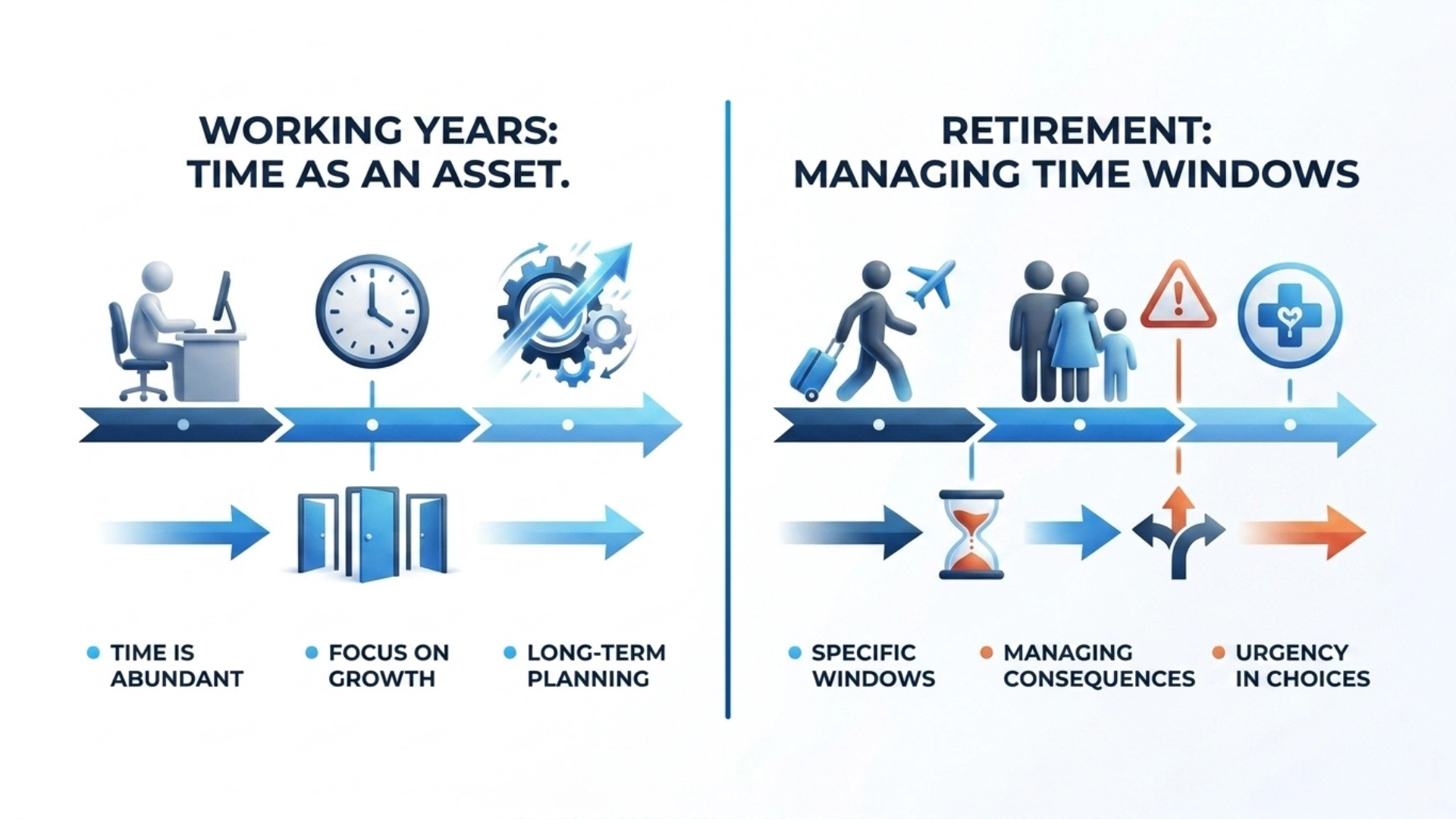
For much of our working lives, time is an asset. We have years to save, years to invest, and years to recover from mistakes. Retirement changes that equation. Certain opportunities only exist during specific windows of time. Once those windows close, the conversation shifts.
Instead of “How do we create flexibility?” the question becomes “How do we manage the consequences of decisions that were never made?” Those are very different conversations.
Waiting Is Still a Decision
This may be the most important idea of all. Many people think they have two choices: make a decision, or don’t make a decision. But that’s rarely true, because choosing not to act is often its own decision.
Waiting decides something. Delaying decides something. Postponing decides something. The outcome may not be visible immediately. But the decision is still being made.
What an Integrated Plan Helps You See
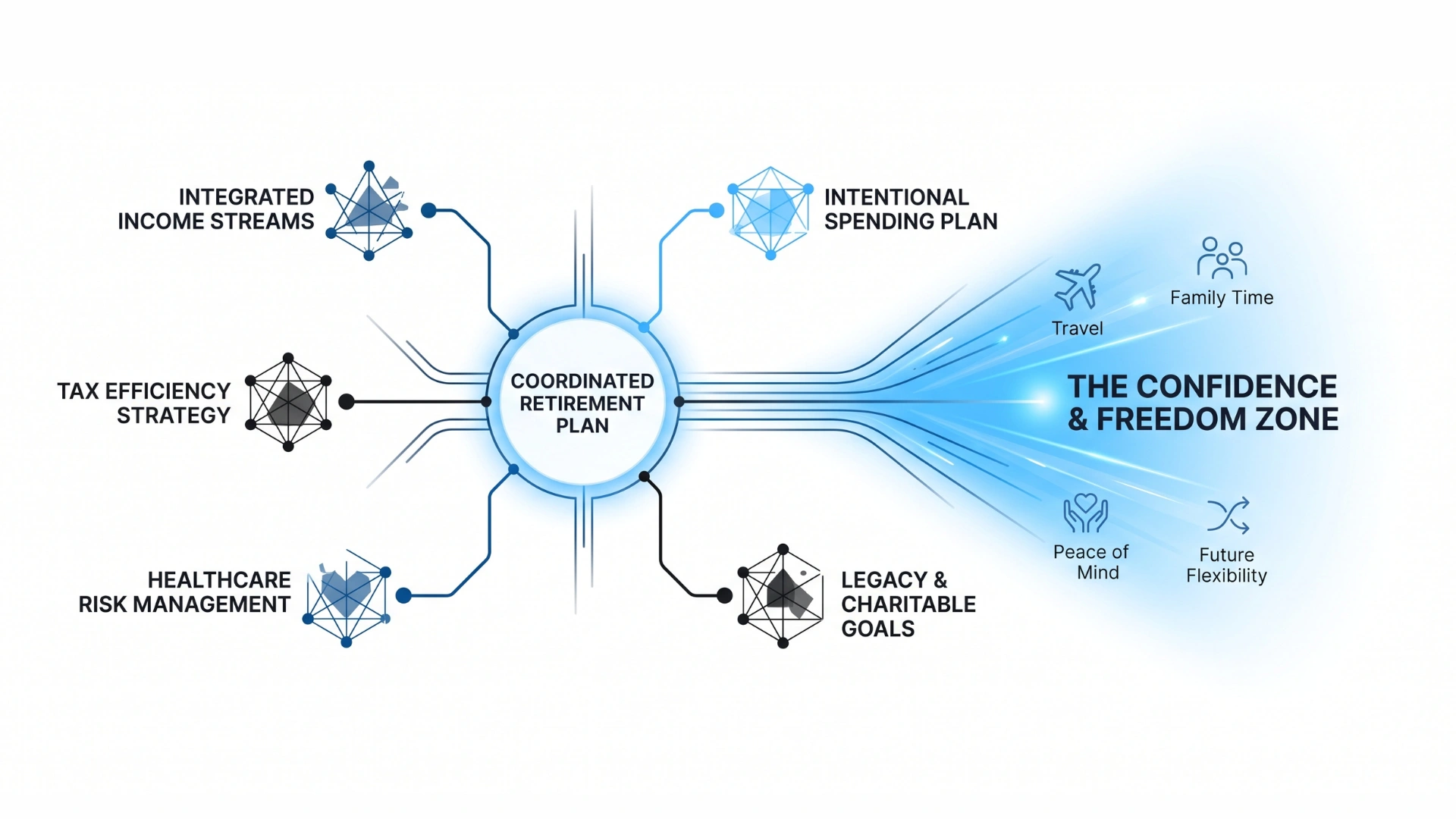
One of the benefits of a plan built as one integrated whole is that it helps identify decisions before they become urgent. Not because every action needs to happen immediately, but because understanding what decisions are coming creates options. And options create flexibility.
An integrated plan helps answer questions like: What opportunities exist today? Which decisions become harder later? How do today’s actions affect future choices? What should be addressed now versus monitored over time? That’s often where clarity begins. We’vemade this same case before: retirement rarely goes wrong because of one bad decision, it goes wrong because the decisions were never viewed together.
A Final Thought
Most retirement challenges don’t arrive all at once. They tend to develop quietly: a delayed tax strategy, an estate plan that’s never updated, a retirement decision that keeps getting pushed off, a conversation that’s never had. Individually, none of them feels significant. But over time, they can shape the entire trajectory of a retirement plan.
That’s why the hidden cost of waiting isn’t always measured in dollars. Sometimes it’s measured in lost flexibility, less control, fewer options, or opportunities that are no longer available.
Because in retirement, the goal isn’t simply to make good decisions. It’s to make them while you still have the ability to choose from the widest range of possibilities. And that’s often where thoughtful planning creates its greatest value.